
Radiology Classes: Powerful Career & Eligibility Guide

Updated Post: 09 Mar 2026
Share Post:



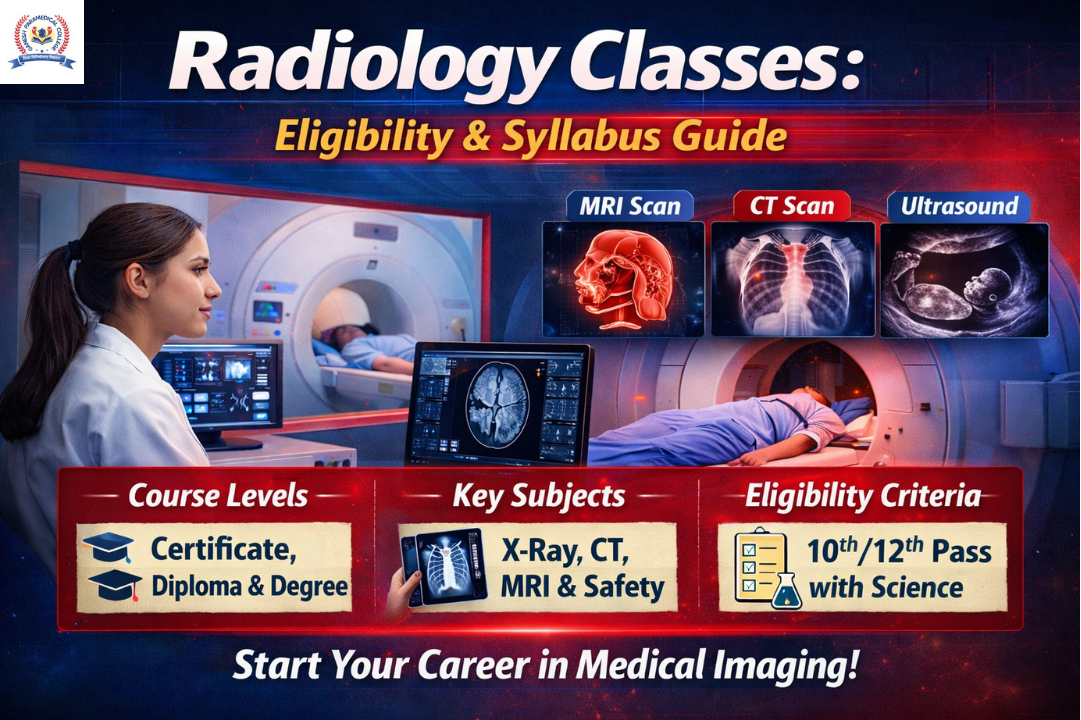
Radiology Classes: Powerful Career & Eligibility Guide
Overview
Radiology is the specific department in healthcare industry which is related with the radiographic techniques of testing. These include various types of tests like MRI, USG, PET scan and other radiological related test. Radiology classes are designed to train the students related to these techniques and the protocols used during the testing for various abnormalities in the body. MRI uses magnetic waves; similarly CT uses motorized X rays to create 3D images of the abnormalities. This helps in easy and early detection of abnormalities in the body.
What are Radiology Classes?
Radiology classes are designed to teach the students related the various techniques and technologies related to radiological testing. This testing includes various procedures which uses radiations for the detection of abnormalities. There are various types of testing procedures that are used for the detection of abnormalities and these include MRI, CT, PET and USG testing procedures. These classes help the students to learn and get to the protocols and other aspects of radiological testing.
What are the Types of Radiology Courses
Radiology education is offered at different levels.
1. Certificate in Radiology
- Duration: 6 months to 1 year
- Suitable after 10th or 12th
- Focus on basic X-ray techniques
2. Diploma in Radiology and Imaging Technology
- Duration: 2 years
- Requires 12th with science
- Covers X-ray, CT, and basic imaging
3. Bsc. Radiology
- Course Duration: 3 to 4 years
- Requires 12th with Physics, Chemistry, Biology
- Covers advanced imaging like MRI, CT, and digital radiography
4. Postgraduate Radiology Programs
- Duration: 2 years
- Requires relevant bachelor’s degree
- Focus on specialization
What is the Eligibility Criteria for radiological classes?
Eligibility varies depending on the course level.
For Certificate Courses
- 10th or 12th pass
- Science background preferred
- Minimum 40–50% marks
For Diploma Courses
- 12th pass with science
- Physics usually mandatory
- Minimum 45–50% marks
For Degree Courses
- 12th pass with PCB (Physics, Chemistry, Biology)
- Minimum 50–60% marks
- Some colleges conduct entrance exams
Eligibility Summary Table
| S. No. | Course Level | Qualification | Minimum Marks | Science Required |
| 1 | Certificate | 10th/12th | 40–50% | Preferred |
| 2 | Diploma | 12th | 45–50% | Yes |
| 3 | Degree | 12th | 50–60% | Yes (PCB) |
What is the Syllabus of Radiology Classes?
Core Medical Subjects
- Human Anatomy
- Human Physiology
- Pathology
- Basic Pharmacology
Radiology-Specific Subjects
- Radiation Physics
- Radiographic Techniques
- X-ray Imaging
- CT Scan Technology
- MRI Technology
- Ultrasound Basics
- Radiation Safety and Protection
- Digital Imaging
- Imaging Equipment Maintenance
Practical Training
Practical exposure is a major part of radiology education.
Students learn:
- Patient positioning techniques
- Operating X-ray machines
- CT and MRI observation
- Handling digital imaging systems
- Following radiation safety measures
- Record maintenance
Most programs include hospital internships.
Which Skills are Required for Radiology Students?
- Technical skills
- Attention to detail
- Communication ability
- Patient handling skills
- Physical stamina