Paramedical Certificate Courses: Syllabus & Scope

Updated Post: 25 Mar 2026
Share Post:



Certificate Classes in Paramedical: What is the Syllabus and Future Scope
Overview
Certificate classes in paramedical colleges are the classes which are used to teach certificate programs to the students. These certificate programs in paramedical are short duration, affordable and career oriented. There are various types of certificate courses or classes which can have different duration like 6 months, 1 year or more than 1 year certificate programs. Various types of certificate classes include radiology, microbiology, biochemistry etc.
What are Certificate Classes in Paramedical in Detail?
Certificate classes in paramedical are designed for the students to create skilled professionals for the healthcare industry. There are various types of certificate classes courses which are related to biochemistry, microbiology, radiology etc. These certificate courses can be 6 months, 1 year or more than 1 year. There are various highlights related to this course:
Key highlights of certificate classes:
- Short duration compared to diploma and degree programs
- Focus on practical and hands-on training
- Affordable fees in most institutions
- Quick entry into the healthcare workforce
- Flexible learning options in many training centers
- Suitable for students after 10th or 12th
Popular certificate courses in paramedical include:
- Certificate in Medical Laboratory Technology
- Certificate in X-Ray and Imaging Technology
- Certificate in Nursing Assistance
- Certificate in Emergency Medical Care
- Certificate in Operation Theatre Assistance
- Certificate in Dialysis Assistance
- Certificate in ECG Technology
- Certificate in First Aid and Patient Care
Core responsibilities after completing certificate classes:
- Assisting doctors and nurses during patient care
- Performing basic diagnostic tests
- Operating simple medical equipment
- Recording patient information and reports
- Supporting healthcare teams in daily operations
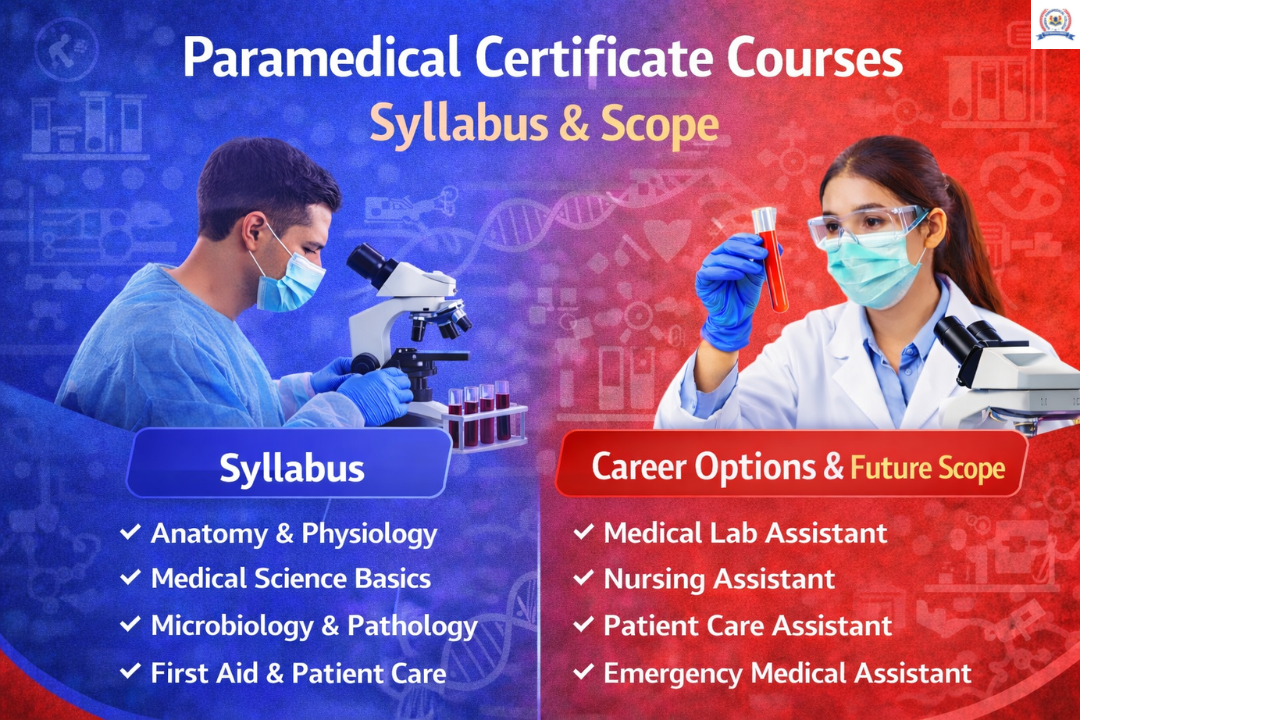
What is the Syllabus of Certificate Classes in Paramedical?
There are various subjected to be studied these classes like:
- Basic Human Anatomy and Physiology
- Introduction to Medical Science
- Microbiology and Pathology (basic level)
- First Aid and Emergency Care
- Medical Terminology
- Infection Control and Hygiene
- Healthcare Ethics and Communication
Practical training includes:
- Handling basic medical equipment
- Collecting and preparing samples
- Monitoring patient vital signs
- Providing basic patient care
- Maintaining records and documentation
- Following safety and sanitation procedures
- Helps build confidence and professional skills
- Acts as a foundation for higher education
- Offers employment opportunities in various medical settings
What are the Career opportunities after completing certificate classes?
- Medical Laboratory Assistant
- Nursing Assistant
- Patient Care Assistant
- Emergency Medical Assistant
- Clinic Assistant
- ECG Technician
Workplaces available:
- Government and private hospitals
- Diagnostic laboratories
- Ambulance services
- Community health centers
What are the Career growth opportunities?
- Promotion to senior assistant roles
- Specialization in specific medical fields
- Transition to diploma or degree programs
- Supervisory or administrative roles
Higher education options:
- Diploma courses in paramedical fields
- Advanced certificate programs
Common workplaces include:
- Hospitals and healthcare centers
- Emergency care units
- Blood banks
- Rehabilitation and therapy centers
- Home healthcare services
Skills Required for Certificate Students
- Attention to detail and accuracy
- Basic understanding of medical procedures
- Communication and teamwork abilities
- Patience and responsibility