
BSc paramedical courses, syllabus, benefits and career options in radiology, lab technology, dialysis and healthcare fields.

Updated Post: 12 Mar 2026
Share Post:



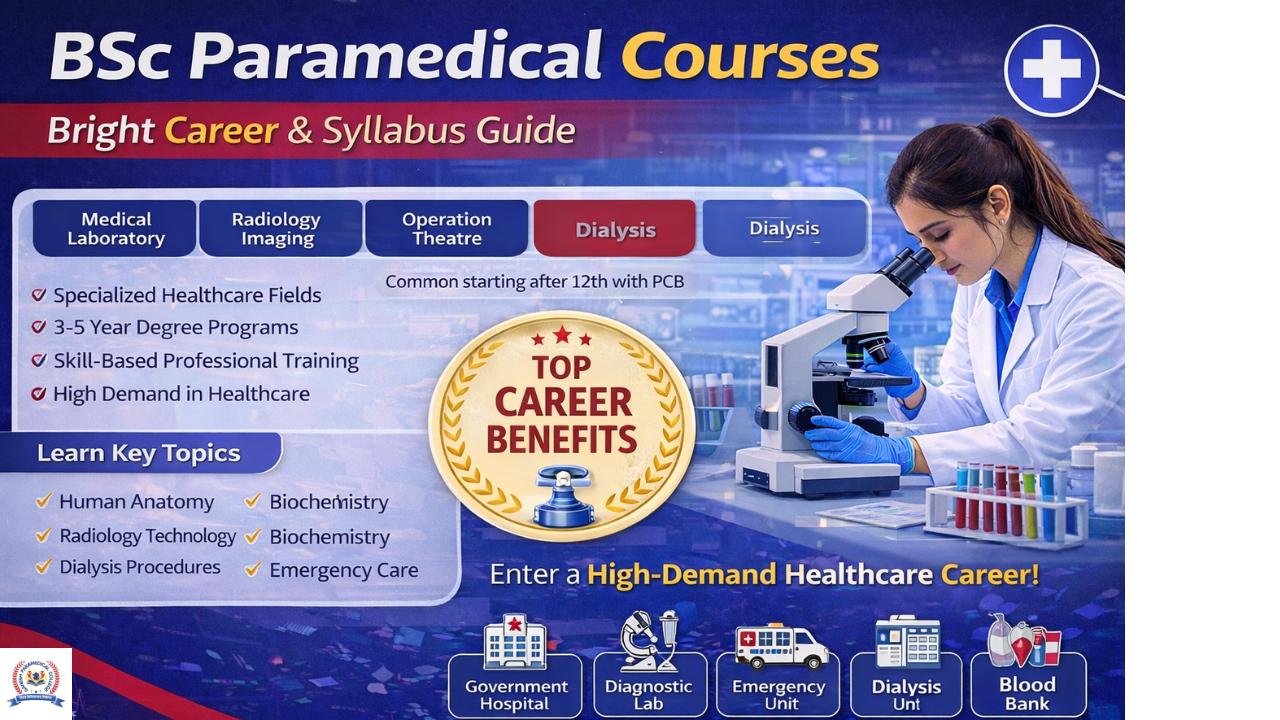
BSc. Paramedical Courses: Syllabus, and Career Options
Overview
Paramedical science provides various types of courses for bachelors and helps to create good job options in the future. There are various types of courses in paramedical that are related to a bachelor's degree. The eligibility for these courses is usually 12th with PCB subjects. There are good career options for the students after doing this type of course. These courses are in radiology, medical laboratory, biochemistry, and microbiology. Each specific domain of the subject has a specific syllabus with a specific job profile. There are various departments in the hospitals, and these departments need different kinds of skills and professionals for the same.
What are BSc Paramedical courses?
BSc or Bachelor's in paramedical courses are skill-based courses that help to create the professionals for the healthcare departments in different domains. There are various types of courses, and these courses are in various domains like radiology, biochemistry, microbiology, medical laboratory technology, etc. The eligibility for these courses is usually 12th with PCB, and they are long-duration courses with around 3 years, and some courses are integrated for 5 years with post-graduation. These are career options courses with a good and bright future scope for all courses.
What are the different types of BSc paramedical courses?
There are various types of BSc paramedical courses, and some are listed below:
BSc Medical Laboratory Technology (BMLT)
- Focuses on laboratory diagnosis of diseases
- Teaches blood testing, microbiology, pathology, and biochemistry
- Students learn to operate laboratory analyzers and microscopes
BSc Radiology and Imaging Technology
- Focuses on medical imaging techniques
- Includes training in X-ray, CT Scan, MRI, and ultrasound
- Students learn radiation safety and imaging procedures
BSc Operation Theatre Technology
- Trains students to assist surgeons during operations
- Includes sterilization techniques and surgical instrument handling
- Students learn anesthesia and patient preparation procedures
BSc Dialysis Technology
- Focuses on the treatment of kidney failure patients
- Students learn dialysis procedures and machine handling
BSc Emergency and Trauma Care Technology
- Trains students to handle emergency medical situations
- Includes patient stabilization and trauma care techniques
What is the Syllabus of BSc Paramedical Courses?
Basic Medical Subjects
These subjects are common in most paramedical degree programs:
- Human Anatomy
- Human Physiology
- Biochemistry
- Pathology
- Microbiology
- Pharmacology
Technical Subjects
For laboratory technology:
- Clinical Biochemistry
- Hematology
- Blood Banking
- Immunology
- Clinical Pathology
For radiology technology:
- Radiation Physics
- Radiographic Techniques
- CT Scan Technology
- MRI Technology
- Imaging Equipment Maintenance
For operating theatre technology:
- Surgical Procedures
- Sterilization Techniques
- Anesthesia Technology
- Surgical Instruments
What are the Career Options After BSc Paramedical Courses?
Common job roles include:
- Medical Laboratory Technologist
- Radiology Technician
- CT Scan Technician
- MRI Technician
- Operation Theatre Technologist
- Dialysis Technician
- Emergency Medical Technician
- Optometrist
What are the Workplaces for Paramedical Graduates?
BSc paramedical professionals can work in various healthcare settings, such as:
- Government hospitals
- Private hospitals
- Diagnostic laboratories
- Imaging centers
- Blood banks
- Medical research laboratories
- Pharmaceutical companies
- Rehabilitation centers
Conclusion
BSc paramedical courses are designed to skill the students in the different domains of the healthcare industry. There are various types of courses, and each course is related to a specific domain of the healthcare industry. There are various types of courses like BSc. radiology, medical laboratory technology, dialysis, microbiology, etc. These courses are job-specific and have great job options. There is good career growth and a good salary for the job profiles.